


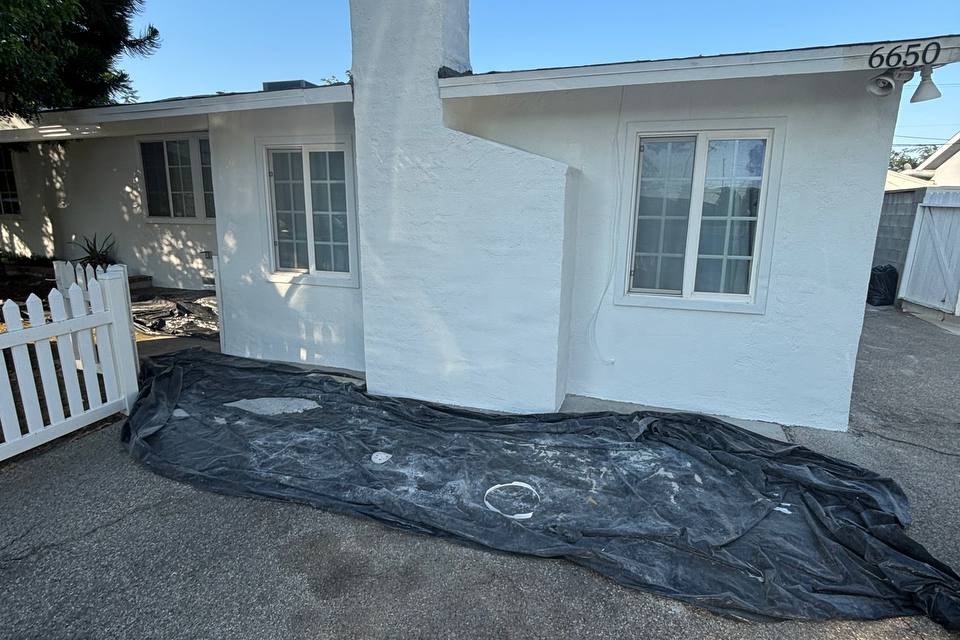
What stucco actually is - and why that matters
Traditional Los Angeles stucco is a three-coat cement plaster system applied over metal lath and a weather-resistive barrier, with a drainage plane behind it. It is not a waterproof skin. It is a cladding designed to shed most water and drain the rest. When you repair it by troweling patch compound into a crack, you have bridged the surface without addressing the lath, the barrier or the reason it cracked. It fails again within two seasons.
What we repair
- Hairline and shrinkage cracking, filled with an elastomeric material that can move with the wall
- Structural and settlement cracks, cut out, re-lathed and rebuilt in coats
- Holes from removed satellite dishes, conduit, signage, hose bibs and old vents
- Water damaged and delaminated areas where the lath has rusted through
- Missing or damaged weep screed at the base of the wall, which is the single most common defect we find
- Failed window and door perimeters, re-flashed and rebuilt
- Chimney and parapet stucco
- Efflorescence and staining from a moisture source
- Full re-stucco and re-coat over sound existing stucco
Texture and colour matching
Los Angeles has decades of stucco finishes: sand float in fine, medium and heavy, dash and lace, Santa Barbara smooth, worm and cat face. Matching is the difference between an invisible repair and a permanent patch outline. We sample the existing texture, mock it up on a board next to the wall, and get your sign-off before we finish. Colour we either match with a tinted finish coat or, where a match is not achievable, we recommend recoating the full elevation to a natural break so there is no patchwork.
Be honest about the cause
Cracks radiating from window corners are normal shrinkage and movement. Cracks that are wide at one end, stair-stepped, or growing measurably are a structural or foundation signal, and we will tell you to have that assessed before we do cosmetic work. We will not sell you a stucco patch over a foundation problem.
Cost
Small crack and hole repair with texture and colour match typically starts at $750. Larger delaminated sections requiring re-lath and three-coat rebuild generally run $1,800 to $6,500. Full elevation recoating is priced per square foot after a site visit. Where a colour match is not achievable we quote the full elevation so the result does not look repaired.
What is included in this service
- Cause assessment before repair, in writing
- Cut back to sound material
- New metal lath and weather-resistive barrier where required
- Correct scratch, brown and finish coat sequence with proper cure time between
- Elastomeric treatment on movement cracks
- Weep screed correction at wall base where missing
- Flashing correction at penetrations, windows and doors
- Texture mock-up approved by you before final coat
- Colour matched finish coat or full elevation recoat
- Site protection, masking and cleanup
Frequently asked questions
Can you match my texture?
Sand float and dash finishes we match closely. Hand-applied lace and Santa Barbara smooth are harder, so we mock it up and get your approval before committing.
Are cracks in my stucco serious?
Hairline cracking is normal. Stair-stepped, widening or diagonal cracks from corners can indicate movement, and we will tell you to have that assessed first.
Will the repair be visible?
On texture, usually not. On colour, sometimes - which is why we often recommend recoating the whole elevation to a natural break.
How long does stucco need to cure?
Each coat needs time, which is why a proper repair takes several days rather than an afternoon.
Other services our Los Angeles crews handle


