


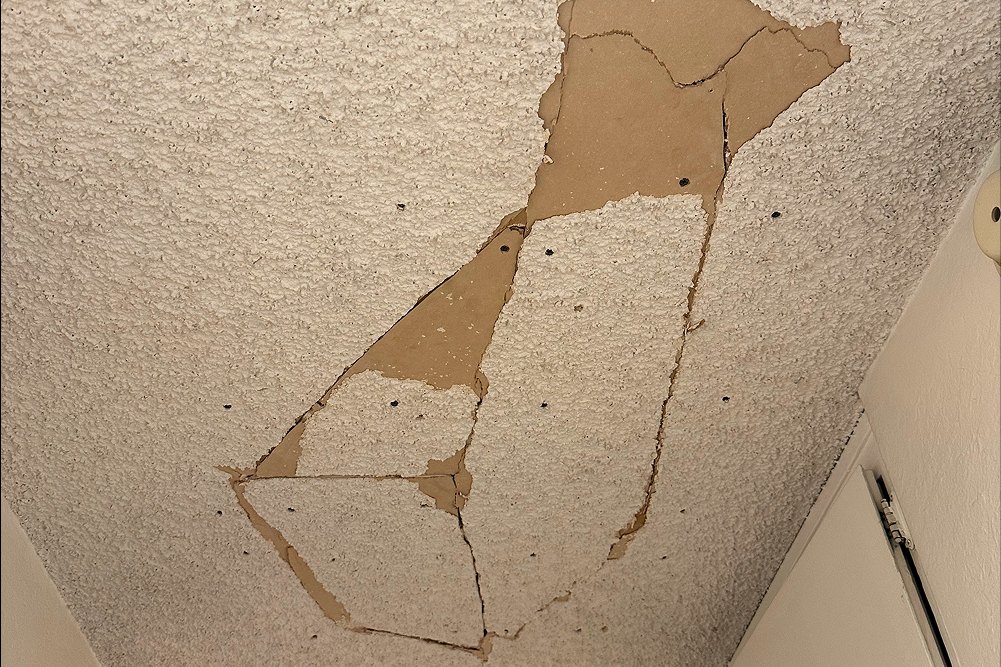
Why most drywall patches look like patches
Because whoever did it stopped three steps early. A correct repair is: cut back to sound material, back the opening with framing or a backer, tape the joint, apply three progressively wider coats of compound, sand, prime the patch, spray or trowel the matching texture, then paint corner to corner or to a natural break. Skip the prime and the patch flashes. Skip the wide float and you get a visible hump under raking light. Skip the texture and you get a smooth island in an orange-peel wall.
What we repair
- Doorknob holes, furniture damage and anchor blowouts
- Holes left behind after plumbing, electrical or HVAC work
- Water stains and soft drywall from a roof or supply-line leak
- Sagging ceilings and nail pops
- Settlement cracks at corners, arches and above doorways
- Corner bead damage on outside corners
- Popcorn and acoustic ceiling texture removal and refinishing
- Full sheet and full wall replacement after demolition
- Garage firewall repair, including the five-eighths type X requirement
Texture matching is the whole job
Los Angeles housing stock runs through orange peel, knockdown, skip trowel, sand swirl and smooth. We spray-match the texture rather than dabbing it on with a brush, and we keep the sprayer in the truck so we finish the same visit instead of coming back. On hand-troweled Spanish and Mediterranean plaster we trowel by hand to match the original pattern.
Fix the cause, not just the wall
If the drywall is soft, something is wet. We find and tell you the source before we close the wall - an angle stop, a shower pan, a roof penetration, a window flashing detail. Closing a wall over an active leak is the most expensive shortcut in home repair, and we will not do it.
Cost
Small patches start at $285 for the visit including materials, texture and paint. A large ceiling section after a leak generally runs $600 to $1,400. Full wall replacement is priced per sheet plus finish. We give the number before we start, not after.
What is included in this service
- Floor and furniture protection, plus plastic dust containment
- Cut back to sound material and back the opening properly
- Tape and three coats of joint compound
- Sanding with vacuum dust control
- Primer on the repair before texture
- Sprayed or hand-troweled texture matched to the existing wall
- Paint to a natural break or corner to corner
- Moisture check to confirm the cause is resolved
- Debris removal and clean site
Frequently asked questions
Can you match my texture exactly?
Orange peel and knockdown we match closely enough that you will not find the repair. Hand-troweled plaster is harder but we get very close.
Do you paint after the repair?
Yes. A drywall repair without paint is not a finished repair. If you have your existing paint we use it; if not we can color match.
How long before I can paint or hang something?
We finish and paint the same visit on most repairs. Compound needs to cure between coats, which is why a large repair sometimes runs into a second day.
My ceiling has a brown stain that keeps coming back.
That is an active leak. We will find the source first. Painting over it with stain blocker only hides it until the next rain.
Do you handle asbestos texture?
We test pre-1980 ceilings before removal. Positive results go to a licensed abatement contractor and we finish afterward.
Other services our Los Angeles crews handle


