


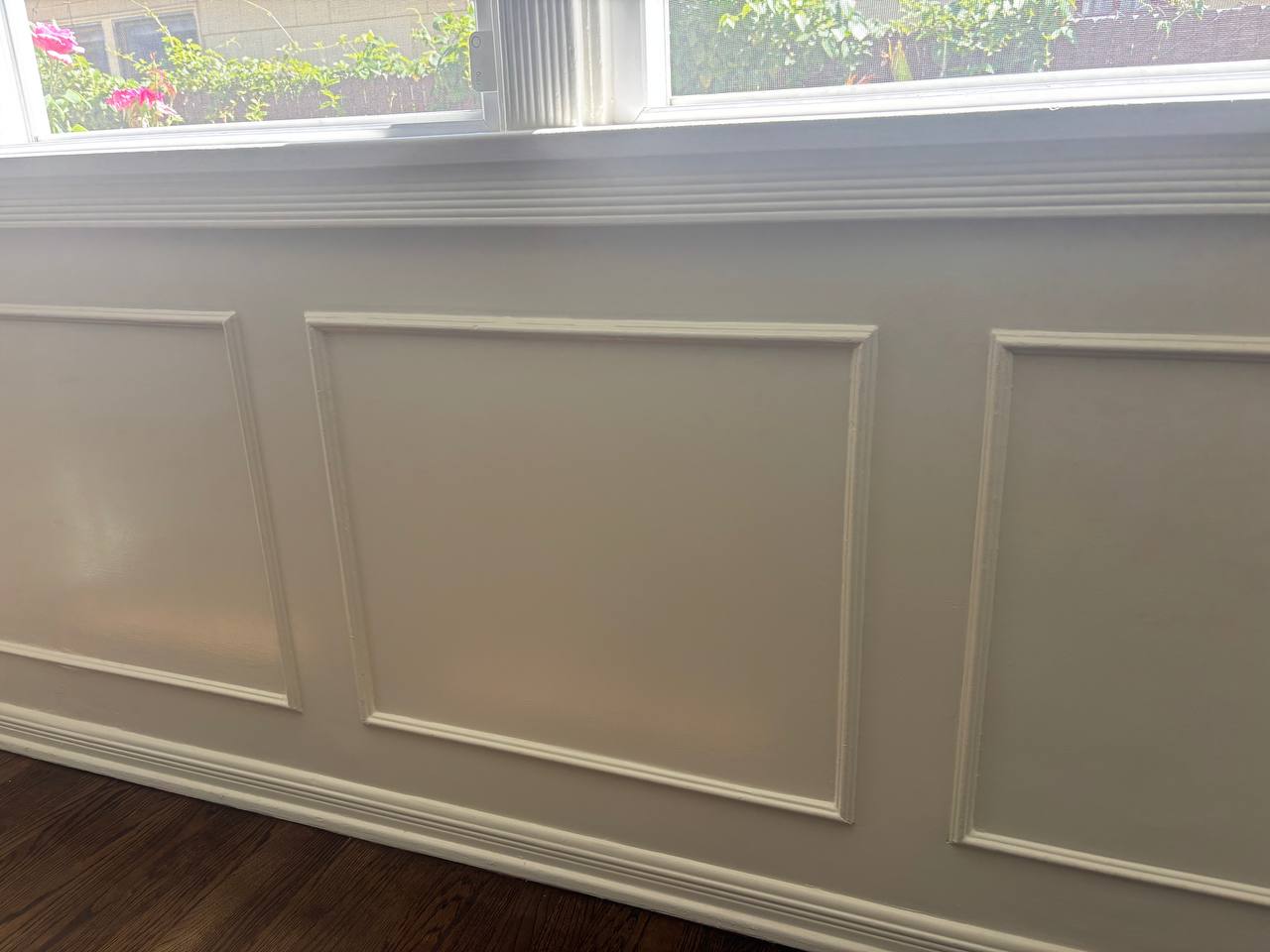

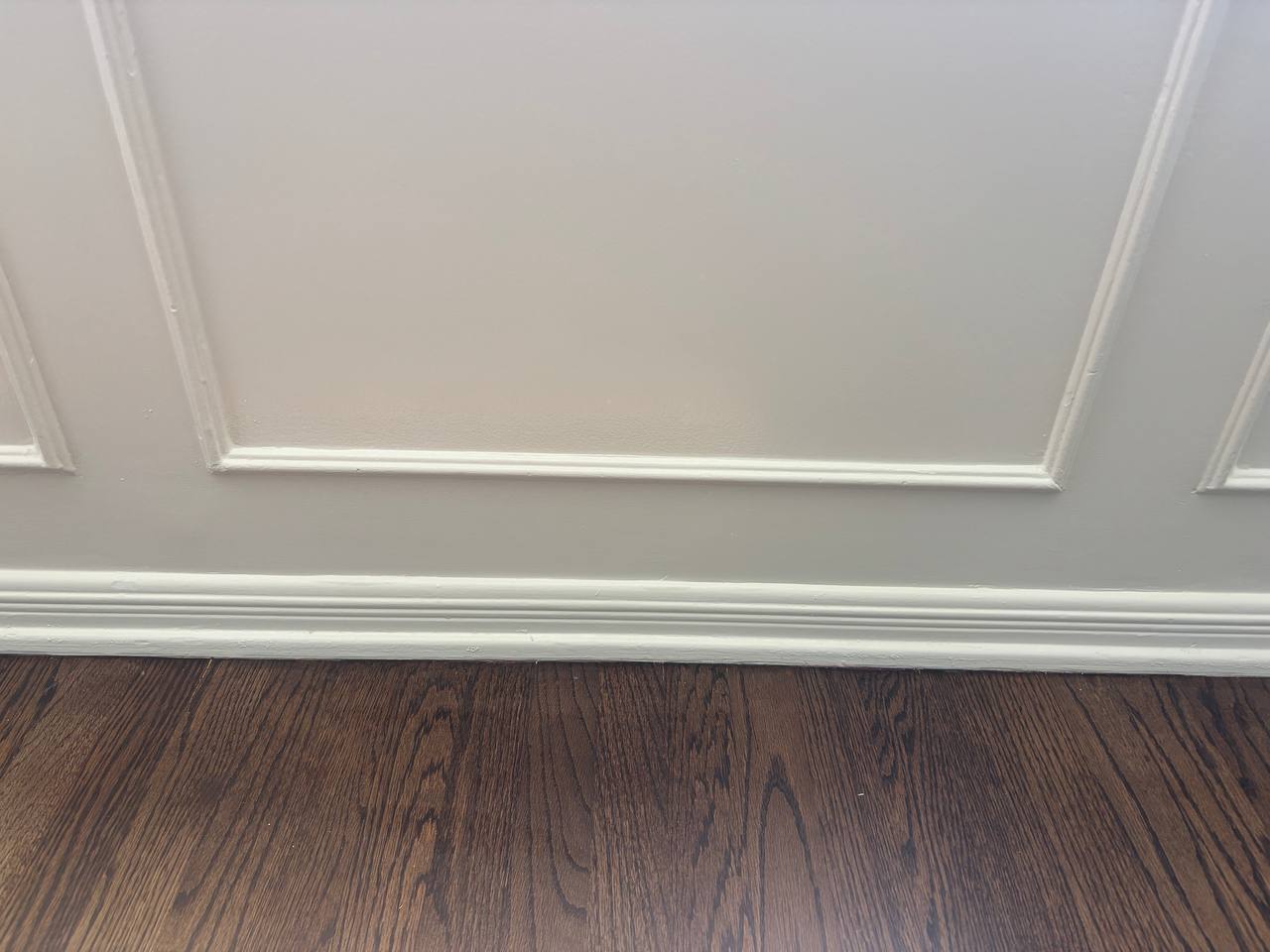
Installation of decorative panelling across both ceiling and walls, treated as a single continuous scheme. Running panelling onto the ceiling raises the difficulty considerably. The layout has to be set out so lines meet correctly at the wall-to-ceiling junction, and any error in spacing accumulates visibly along the length of the room. Our crew set out from datum lines rather than from existing surfaces, since the walls and ceiling in an older property are rarely square to each other. Material was fixed into structure or into installed blocking, joints were filled, and the perimeter was caulked before finishing. Panelling is an effective way to add architectural character to plain rooms, and it also conceals uneven substrate that would be expensive to correct by skimming alone.
This project was decorative paneling installed across both the ceiling and the walls, treated as one continuous scheme. Our crew set out from datum lines instead of from the existing surfaces. Material was fixed into structure or into blocking we installed, joints were filled, and the perimeter was caulked before finishing.
Taking paneling onto the ceiling raises the difficulty considerably. Lines have to meet correctly where wall and ceiling join, and any spacing error accumulates visibly down the length of the room. In an older property the walls and ceiling are rarely square to each other, which is why we never measure off them.
Paneling does two jobs. It adds architectural character to a plain room, and it hides uneven substrate that would be costly to flatten by skim coating alone. If your ceiling has old patches or waves, say so, because that may make paneling the more sensible route.
Plan the lighting with the grid. Recessed cans, a fan or a pendant should land in the center of a panel or on a joint, never at random. Material overhead adds weight, so fastening into framing is not optional. This is finish carpentry and needs no permit unless electrical is being added or moved.
Share the room dimensions and a style you like, and we will send back a free written estimate.