


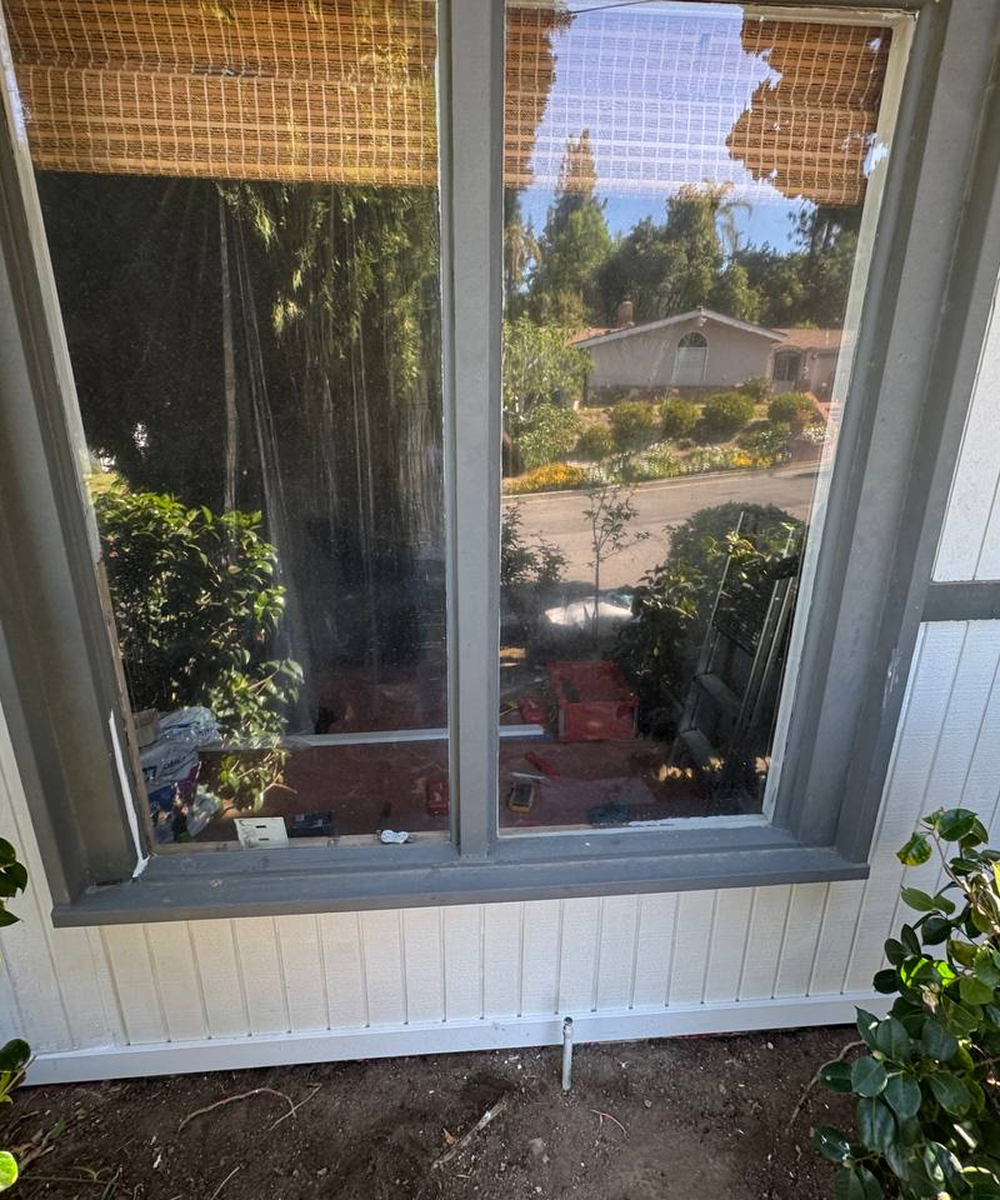
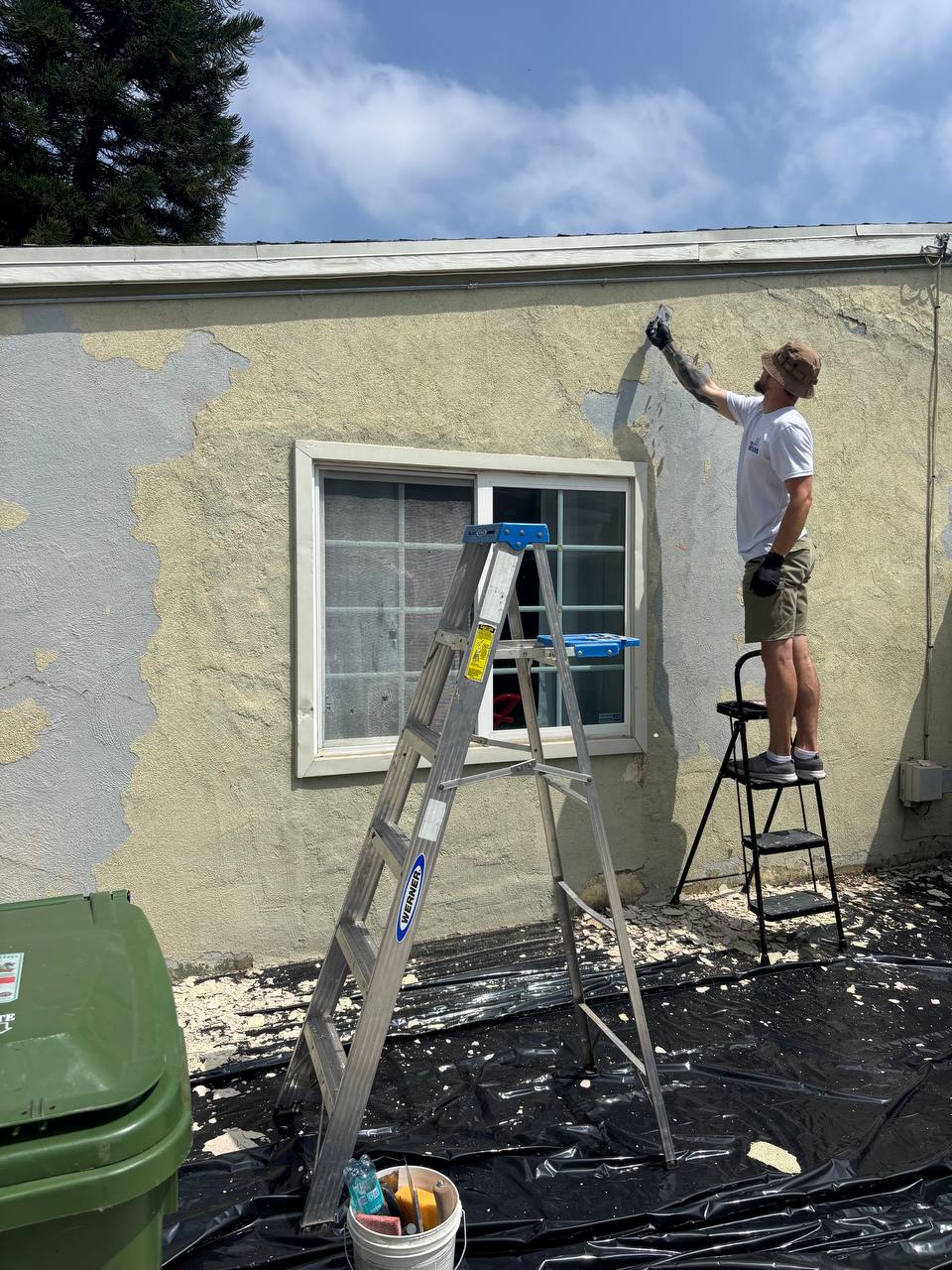
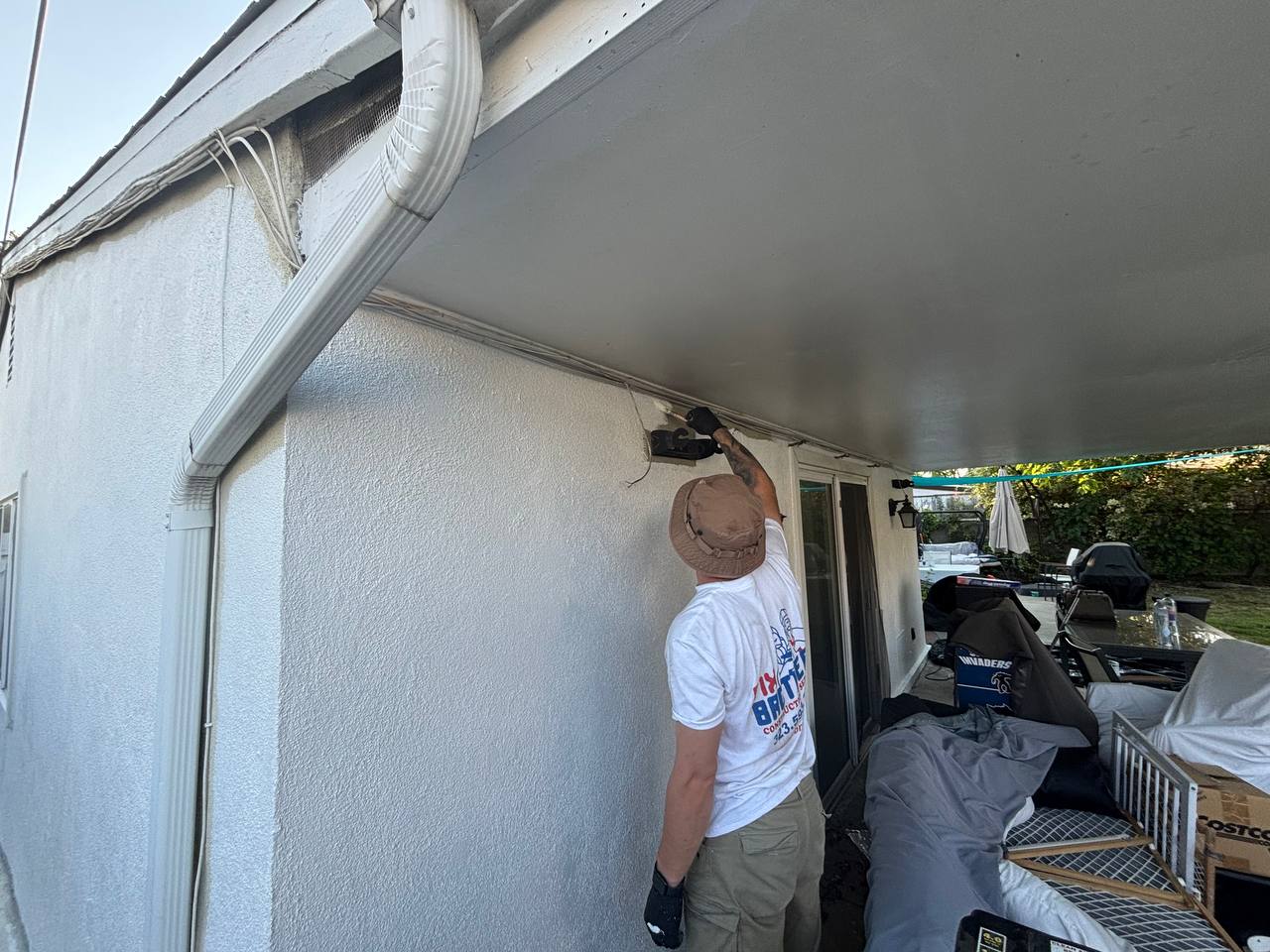
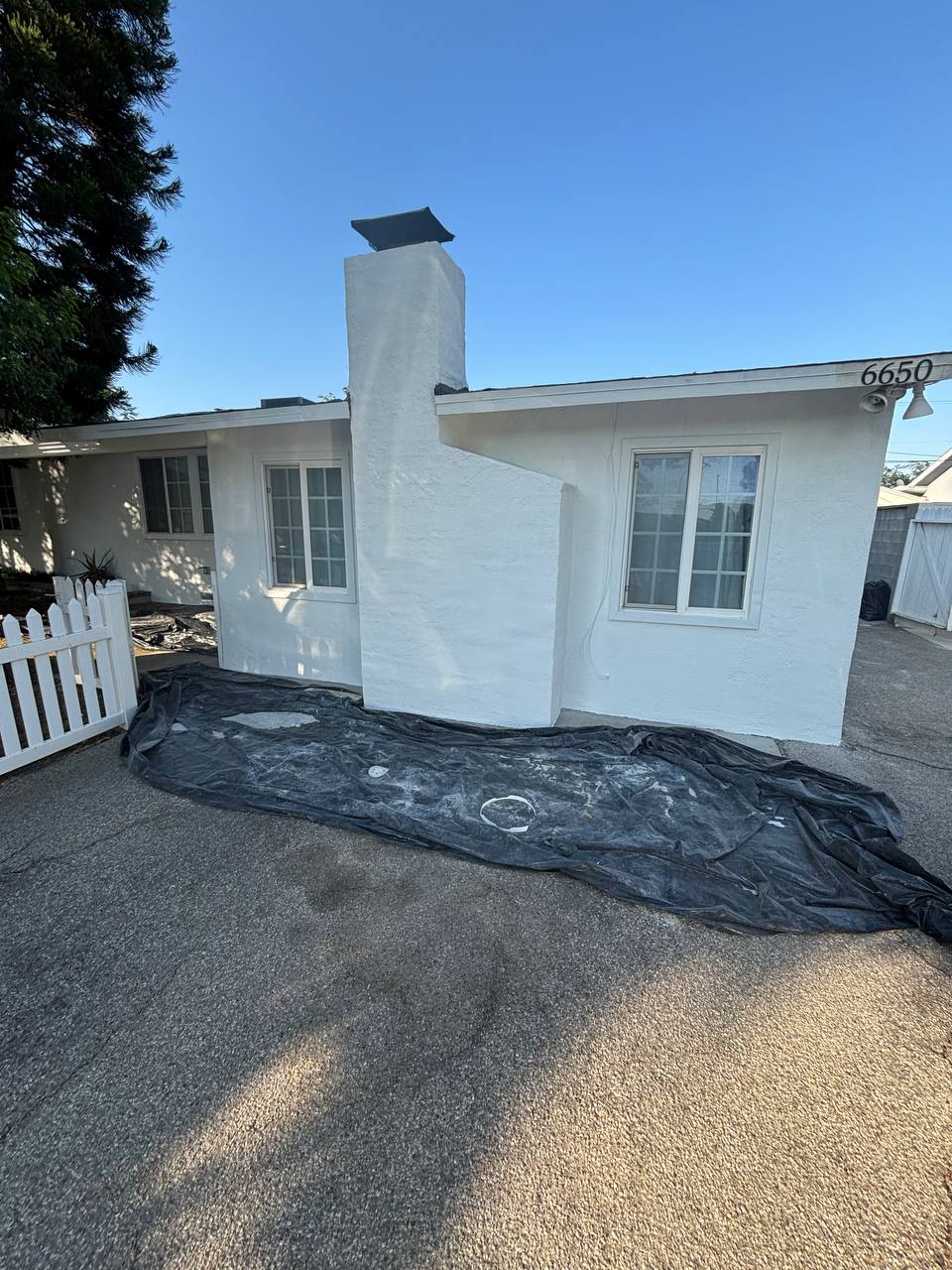
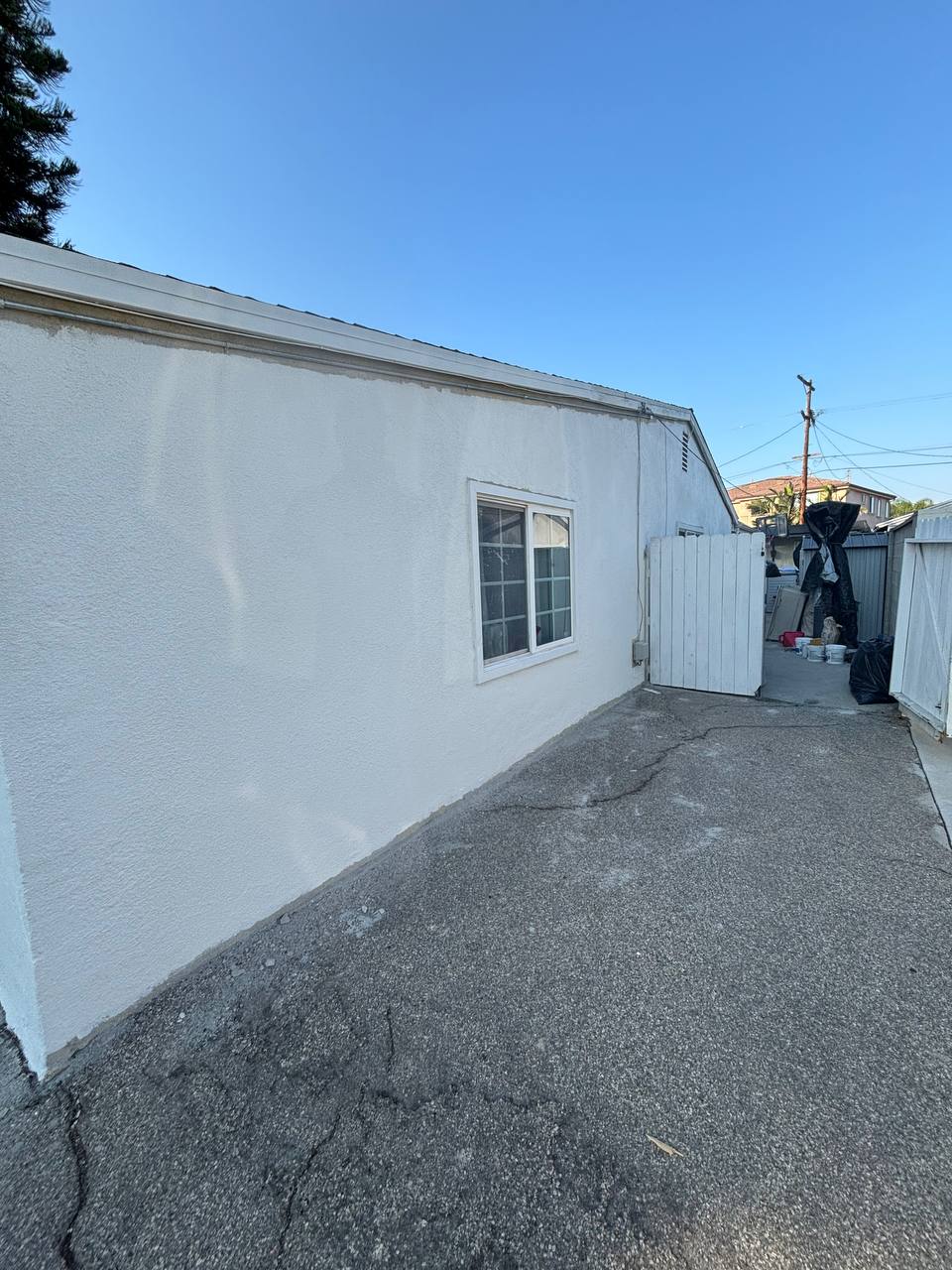
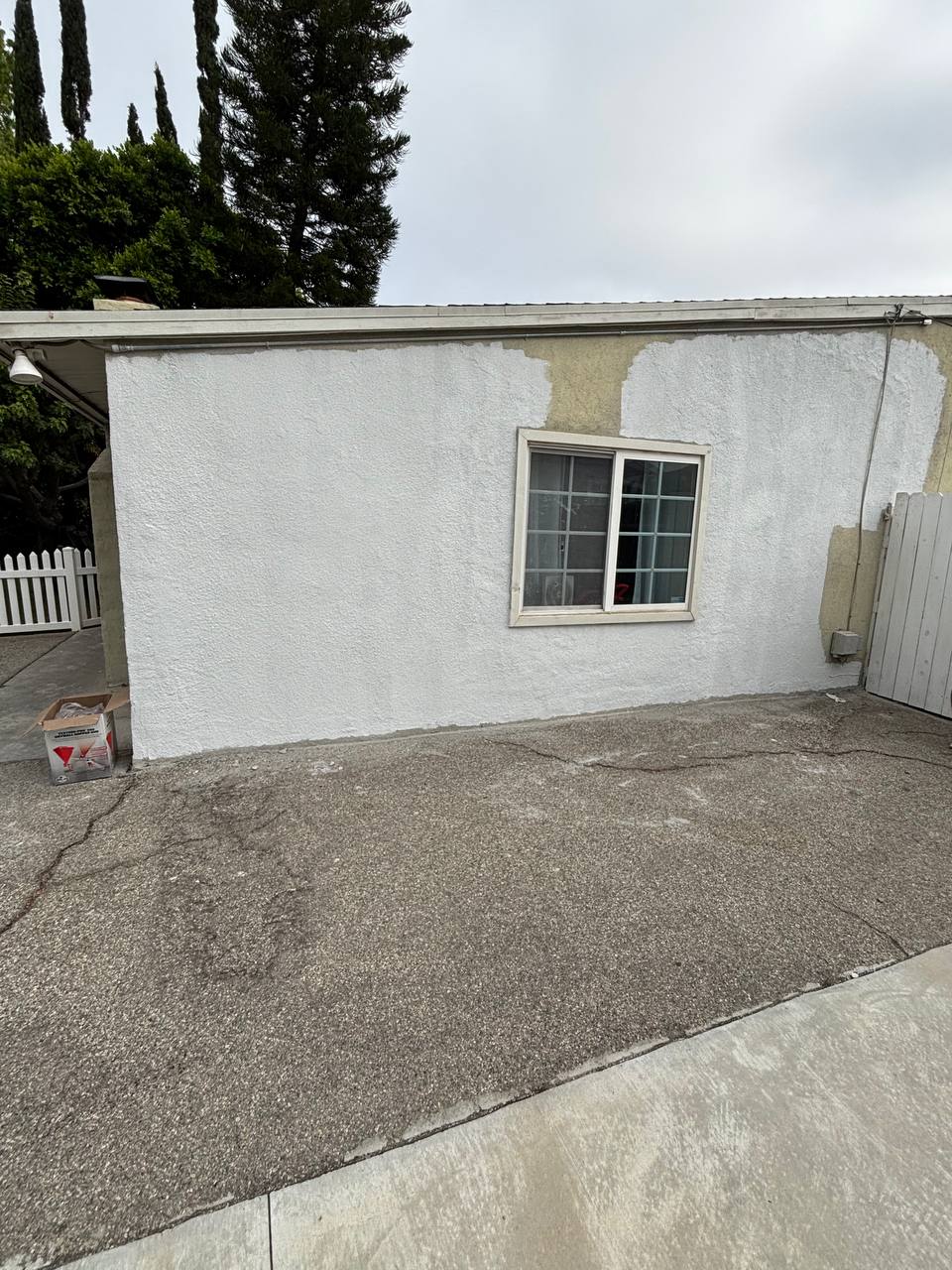

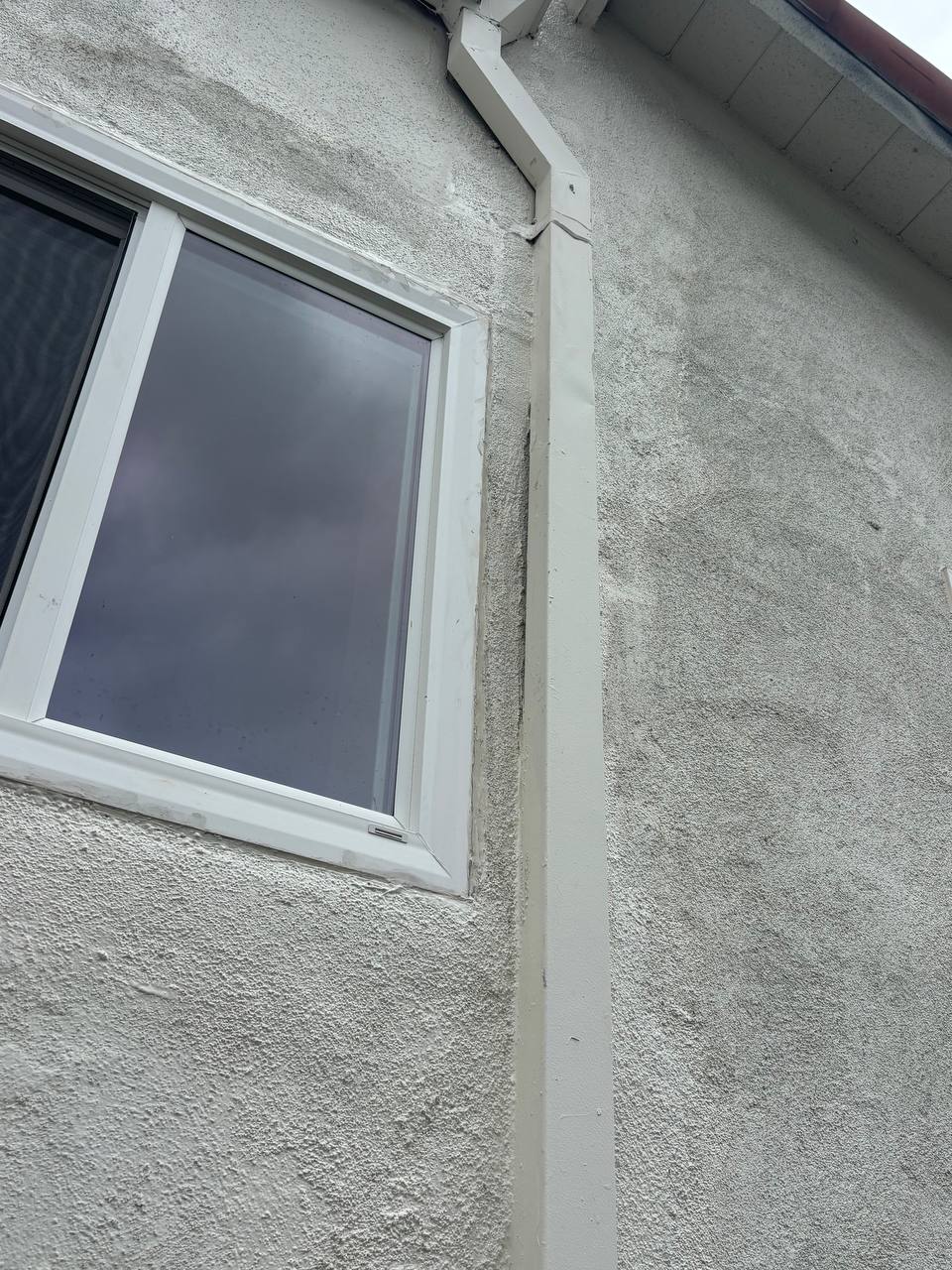
Restoration of an exterior facade together with the internal wall behind it, addressing both faces of the same problem. When an internal wall shows damp or cracking, the cause is frequently outside: failed stucco, an open joint, a blocked or misdirected downspout, or a missing sealant line around an opening. Repairing only the inside face means the same damage returns. For this project the external envelope was repaired first so the wall could dry, then the internal surface was made good. The work covered patching and reinstating the exterior finish, sealing the points of water entry, and repairing, skimming and refinishing the wall inside. We carry out stucco and facade repair, waterproofing details and interior making good across Los Angeles, and we look for the cause before quoting the repair.
A 1979 single-family home in Pacific Palisades with traditional three-coat stucco over wire lath. Close enough to the coast that the elevation takes salt air and marine damp, and old enough that the last full repaint was several owners ago.
Repaint the front and side elevations, and deal with the cracks first so they do not come back through the new paint. He had already been quoted twice by painters who offered to fill the cracks with caulk and paint over them.
Two different kinds of cracking that need two different answers. Most of it was hairline shrinkage crazing in the finish coat, which is cosmetic. But there were also structural cracks running diagonally from window corners, and an area below a hose bib where the stucco had delaminated from the lath entirely and sounded hollow when tapped. The existing paint was chalking heavily across the whole south elevation, which means anything applied over it would have had nothing to bond to.
Sounding the entire elevation before quoting the paint. It takes a couple of hours with a hand and a tapping tool, and it changed the job. The hollow area below the hose bib was invisible from three feet away and would have been painted straight over by both of the other bidders. Delaminated stucco does not stay put: it comes away in a sheet within a year or two, taking the new paint with it, and by then the lath behind it has been wet for another two seasons. The repaint would have looked excellent and the wall would have been quietly failing behind it.
On a chalking wall the primer is the whole job. Chalk is a powdered layer of degraded binder, so a topcoat applied over it bonds to powder rather than to the wall and lifts in sheets a few years later. A masonry primer made for chalking surfaces penetrates and binds that layer first. It is the least visible line on the invoice and it is the difference between a repaint that lasts three years and one that lasts twelve.