




A residential bathroom remodel in Van Nuys, carried out from strip-out through to final fit. Much of Van Nuys was built out in the post-war decades, and the original bathrooms in those homes are small, tiled directly onto a mortar bed and often have galvanised supply lines still in place. Opening one up regularly reveals corroded pipework and water damage behind the tub surround that was never visible from the room. We deal with that as part of the job rather than tiling over it. The finished scope covered waterproofing, tiling, new fixtures and fittings, ventilation and finishing. Where the original layout is cramped, small changes such as moving the door swing or switching to a wall-hung vanity make a disproportionate difference. We work throughout the San Fernando Valley and our shop is on Prairie St in Chatsworth, which keeps response times short across the north Valley.
A single-family home in Van Nuys, built in 1972. Original bathroom, original layout, and the usual inheritance of a house of that age: a settled frame with nothing quite plumb, plaster rather than modern board on part of the wall, a cast-iron tub, and galvanised supply lines that had lost most of their bore to corrosion.
A walk-in shower where the tub was, a bigger vanity, and the toilet moved so the door would stop hitting it. In his words: it has been the same bathroom since my parents bought the house, I want it to feel like this decade.
Behind the tub the original waterproofing was a layer of felt, which was standard in 1972 and is not waterproofing by any modern definition. The wall studs behind the tub surround were dark and soft at the bottom of the bay. The floor was out of level by enough that a curbless shower would have drained the wrong way. And the galvanised supply was so restricted that a new shower valve would have delivered disappointing pressure no matter what we specified.
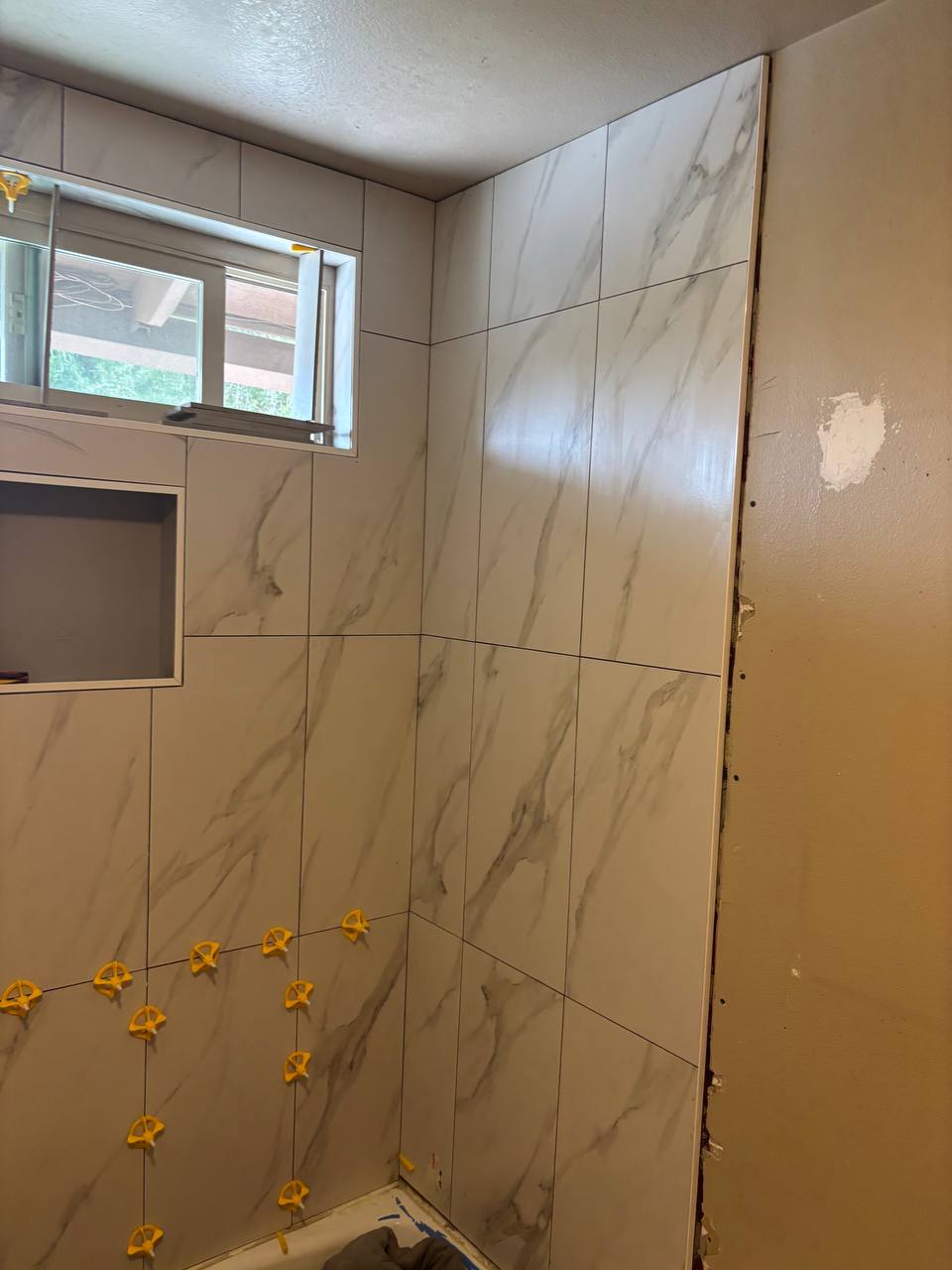
Flood testing the membrane before tiling, and mitring the tile corners instead of using trim. The flood test costs a day of doing nothing, which is why it is skipped constantly. It is also the only moment in the whole build when a waterproofing mistake is cheap to fix. After the tile goes on, finding out that a corner detail leaked means demolishing finished work. On the corners: a metal or PVC trim is faster and it is the standard shortcut, but it puts a hard bright line down every external corner and it collects grime at the edge. A cut and mitred corner reads as one continuous surface, and in a small room that difference is the whole feel of the space.
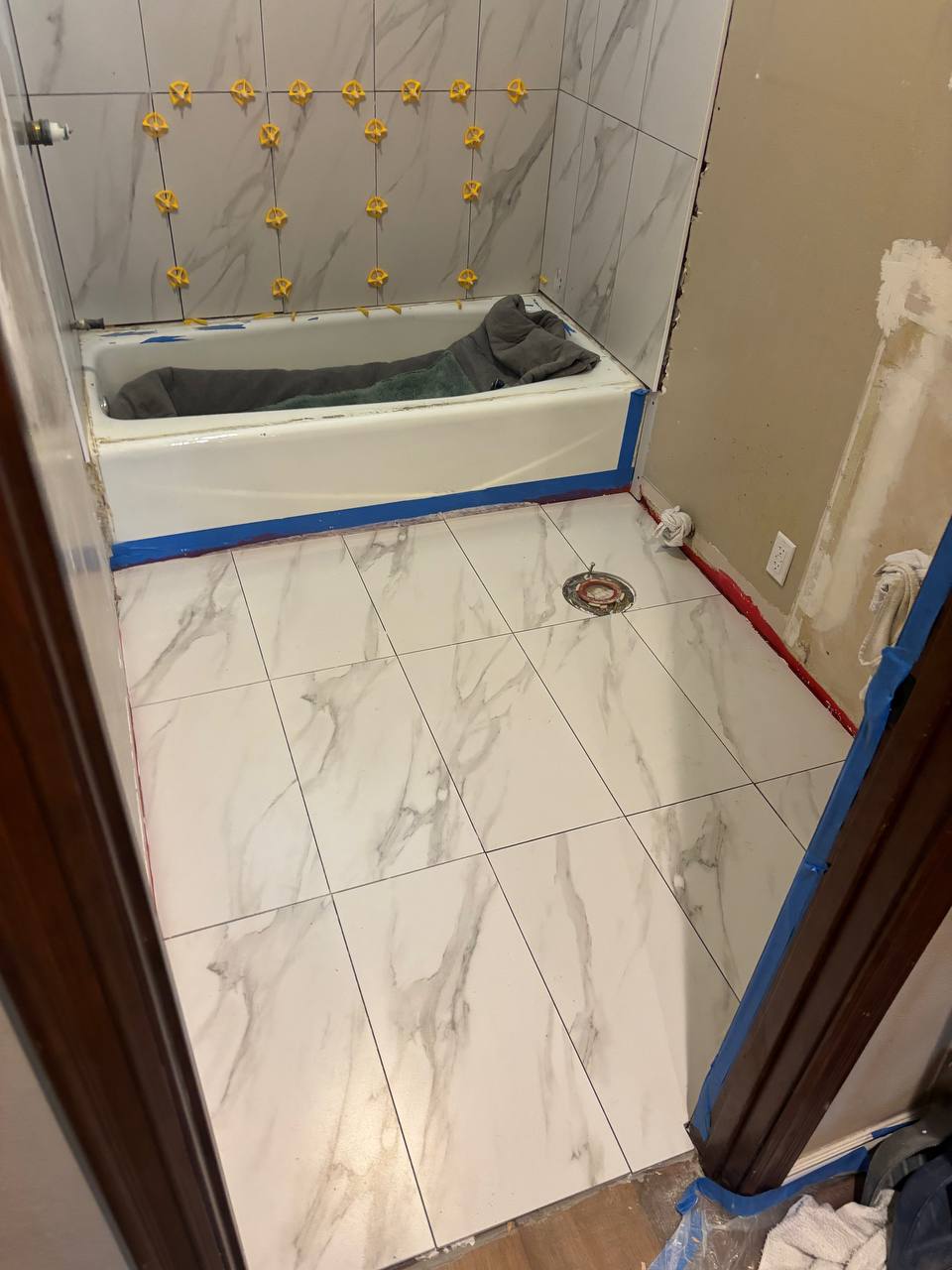
The cheapest bathroom is the one where nothing moves. It is also the one that still has the same problems it had before, just with new tile on them. This door had been hitting this toilet for fifty years. Moving a waste line while the floor is already open is a fraction of the cost of doing it later, and it is the difference between a renovated bathroom and a re-tiled one.