


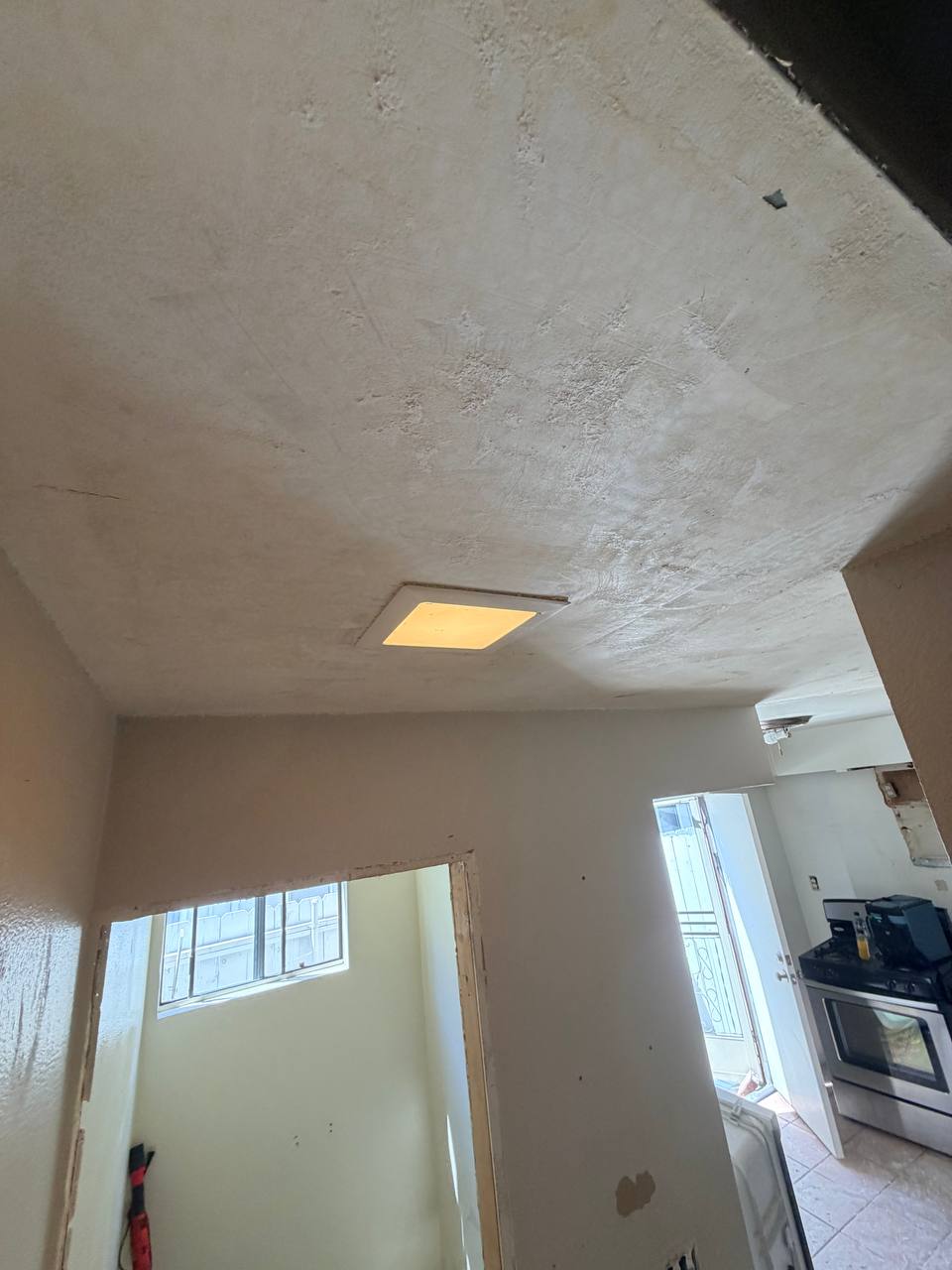
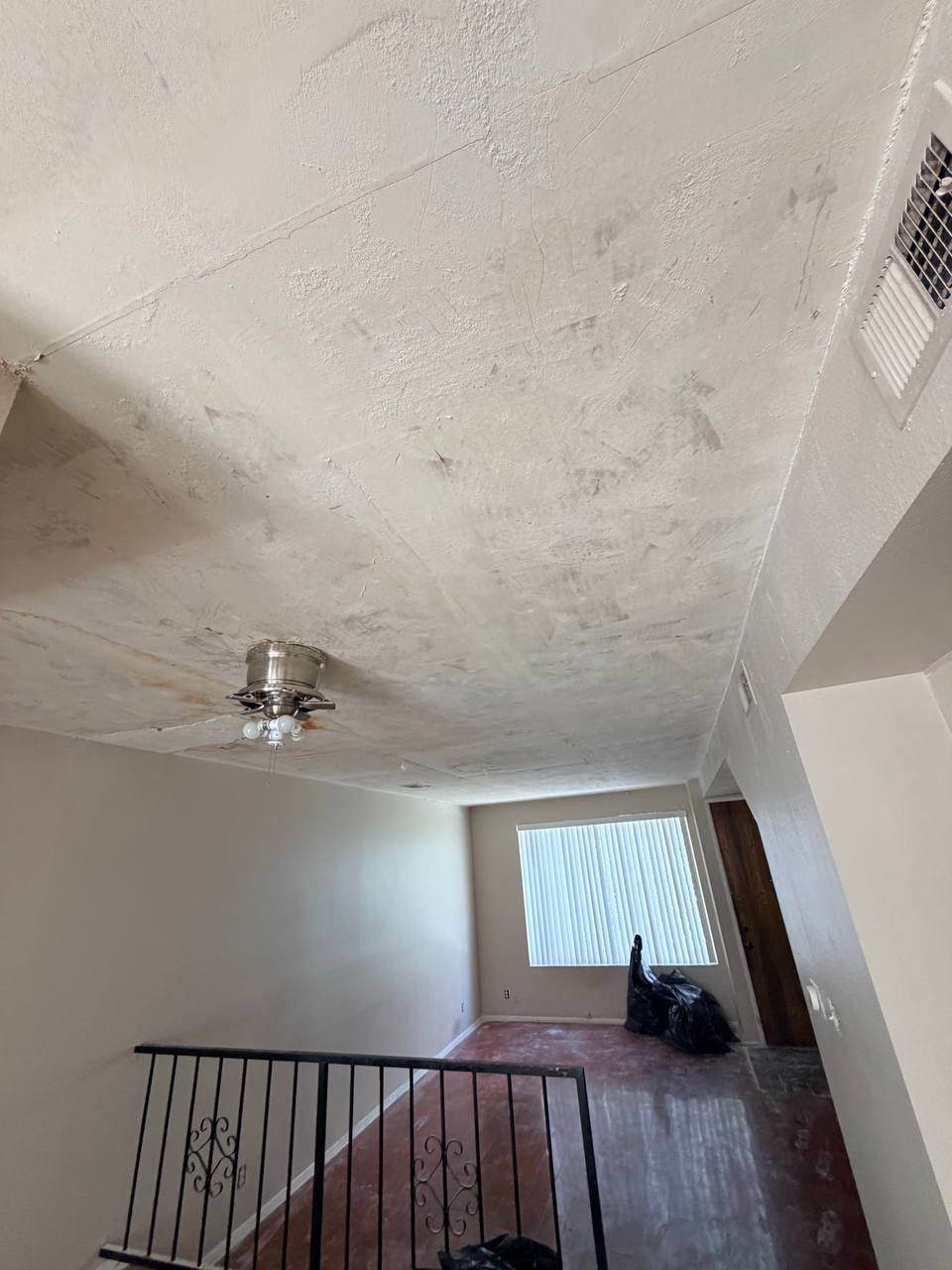
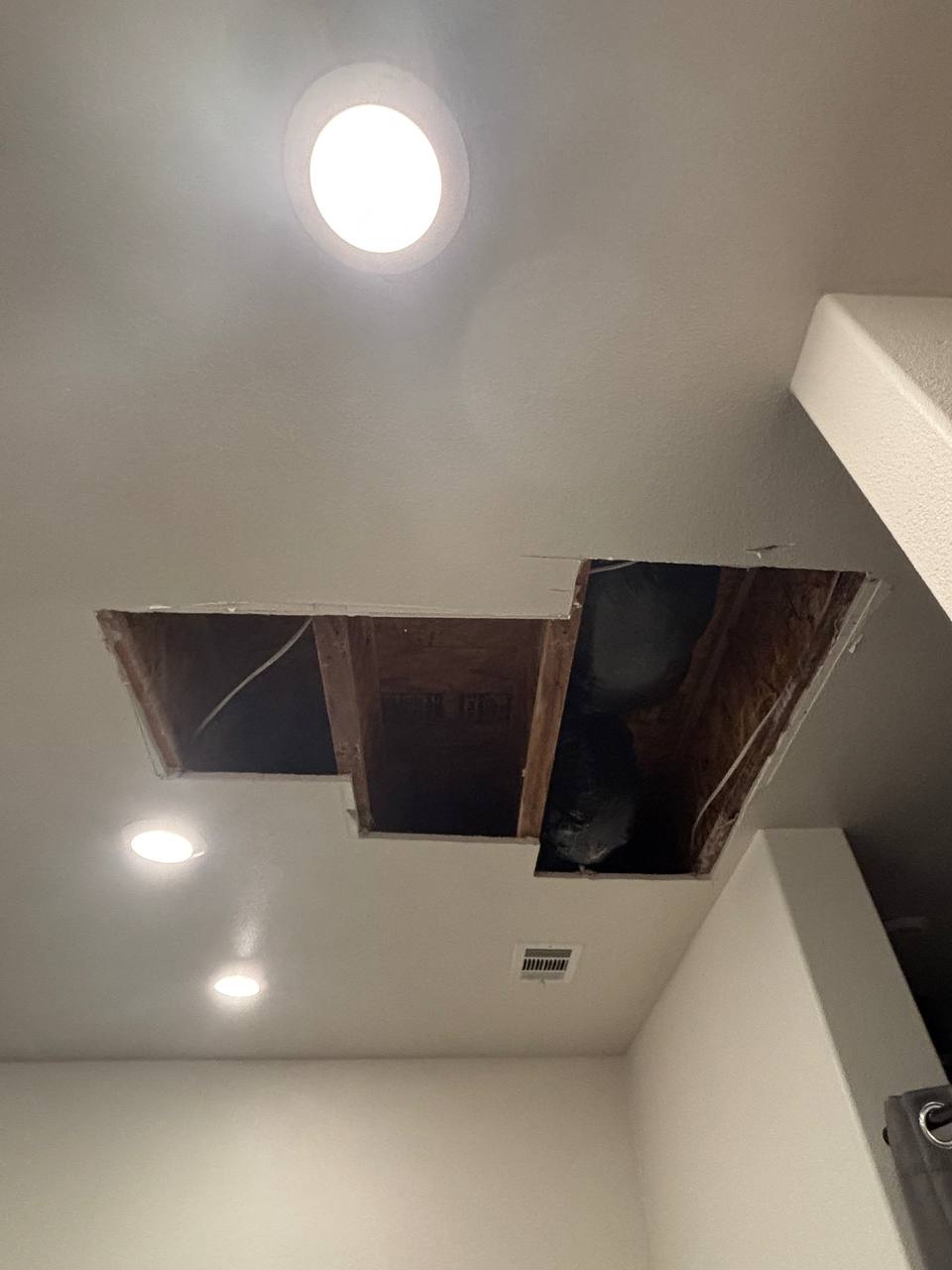
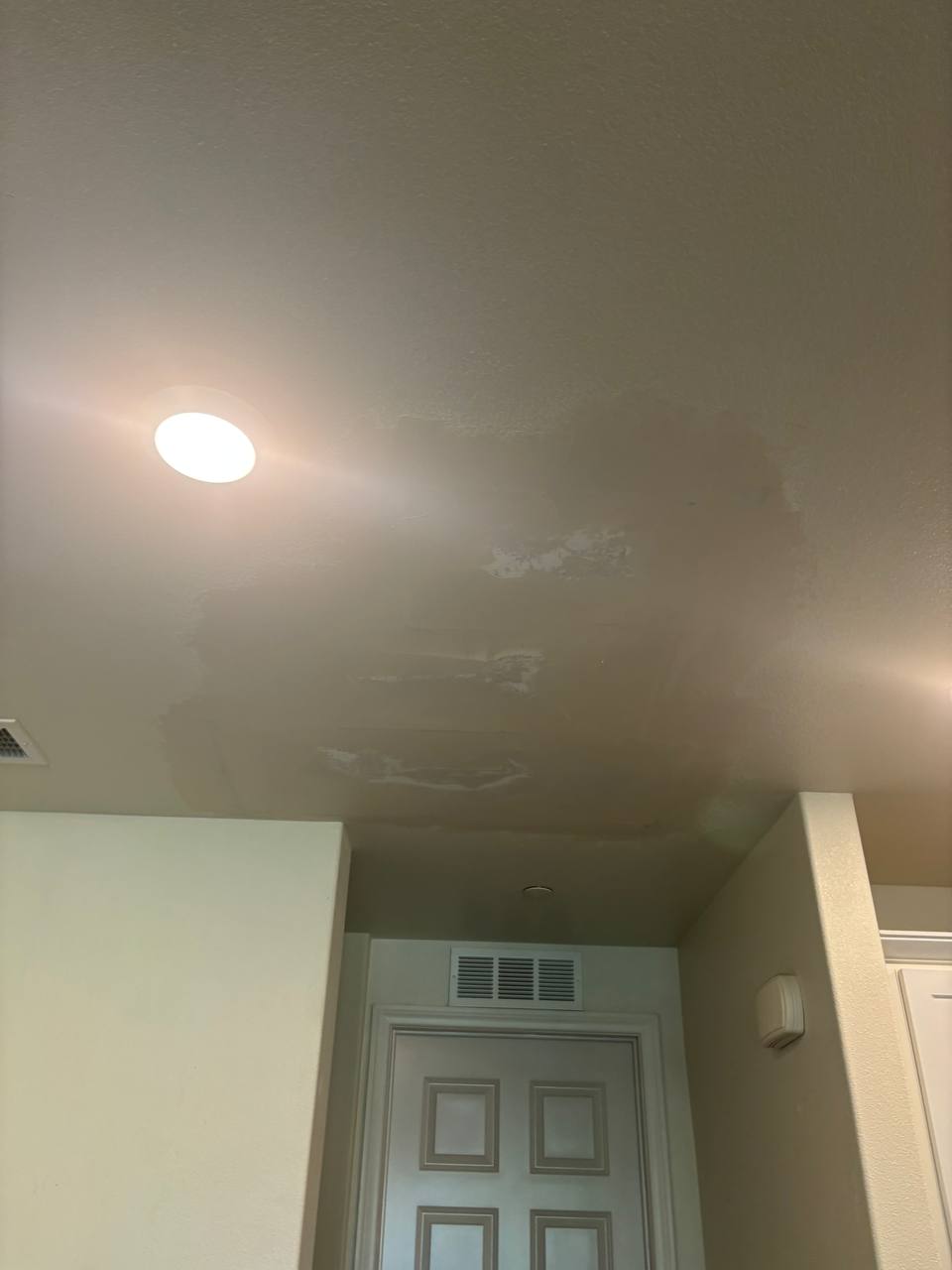
Full ceiling restoration in a residential property, taking a cracked and previously patched surface back to a clean, flat finish. The work involved removing loose and failed material, cutting out and reinforcing cracks, repairing the substrate where it had come away, then skimming, sanding and finishing the ceiling as a single surface. Working the whole ceiling rather than spot-patching is what removes the visible map of old repairs. Everything below the work was sheeted and protected first. Ceiling work generates fine dust across an entire room, and containment is the difference between a tidy job and a week of cleaning for the homeowner. We restore ceilings after leaks, settlement cracking, popcorn removal and general age. Most single rooms are completed in one to three days including drying time between coats.
A single-family home in Tarzana, built in 1981, with a bathroom on the floor above the affected room. Standard half-inch board on the ceiling, painted flat white, and enough age on the paint that any repair would have to be taken to the full plane to disappear.
She had already had somebody out. Their fix was to cut a square out of the ceiling, screw in a new piece, tape it and paint the patch. Six weeks later the patch had cracked around three of its four edges and the surface had a visible rectangle in it. She asked us to make the ceiling look like one ceiling again.
The original leak had come from the second floor. Nobody had confirmed it was fixed, and it was not: there was still an active weep upstairs, so the new patch had been installed into a cavity that was still getting wet. Moisture readings around the patch were high, the board on both sides of the patched area had lost strength, and there was mould on the back of the board and on the joists. The cracking was not bad workmanship on the tape. It was a wet, moving substrate.
Taking the whole plane rather than repairing the patch somebody else left. It is more work and it is more expensive on the day, and we still recommended it, because the alternative had already been tested on this exact ceiling and had already failed. A patch in a ceiling has to do two things at once: match a flat plane and match a surface texture and sheen that has aged for years. Even when the substrate is dry and stable it usually shows. When the substrate is wet it is guaranteed to crack. We would rather quote the honest number once than the cheap number twice.
The first repair failed for one reason: nobody confirmed the leak had stopped. Everything downstream of that, the taping, the sanding, the paint, was competent enough. If you are getting a ceiling repaired after a leak, the first question to ask is not what the finish will look like. It is how the contractor is going to prove the cavity is dry before he closes it.