


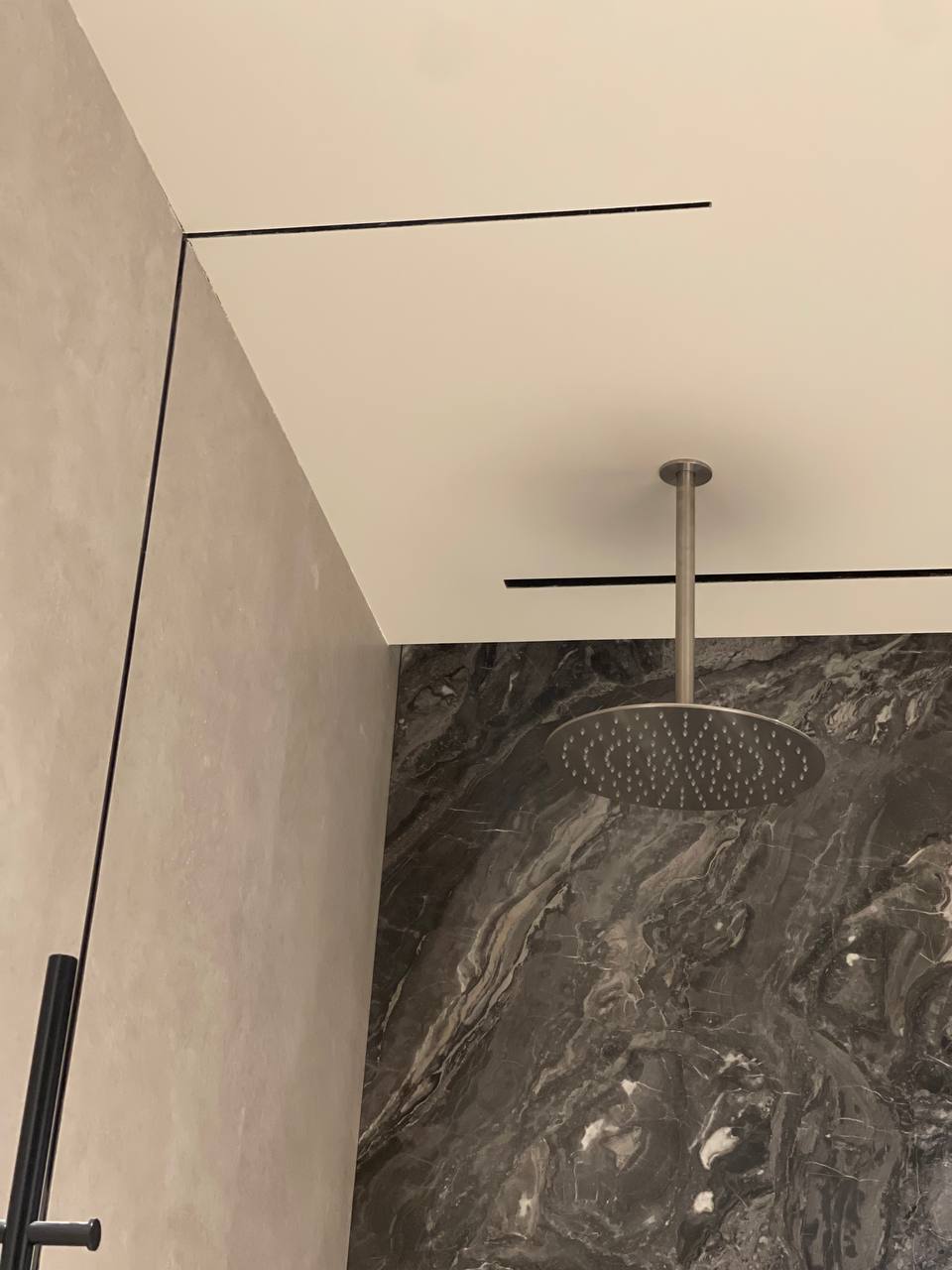
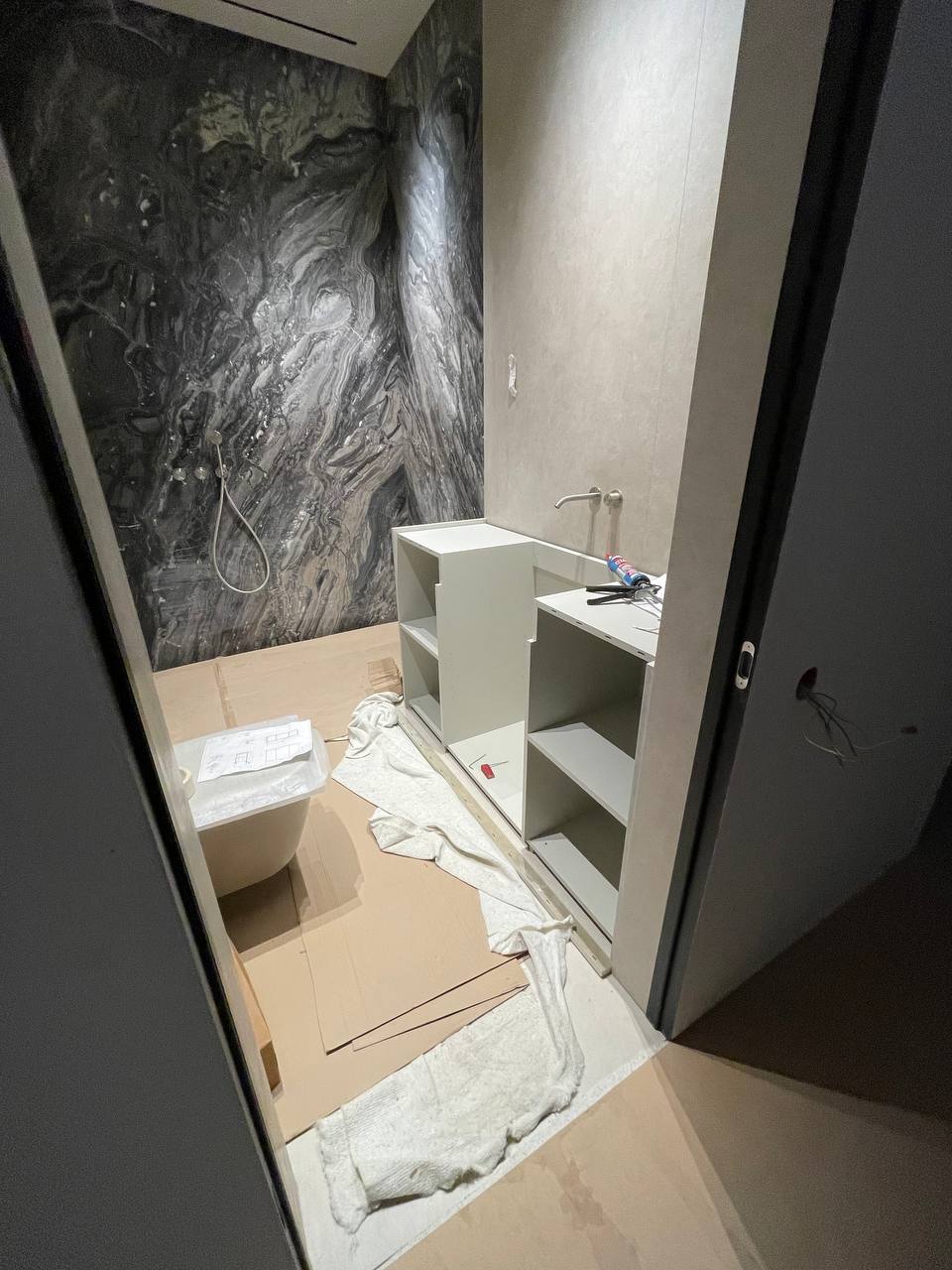


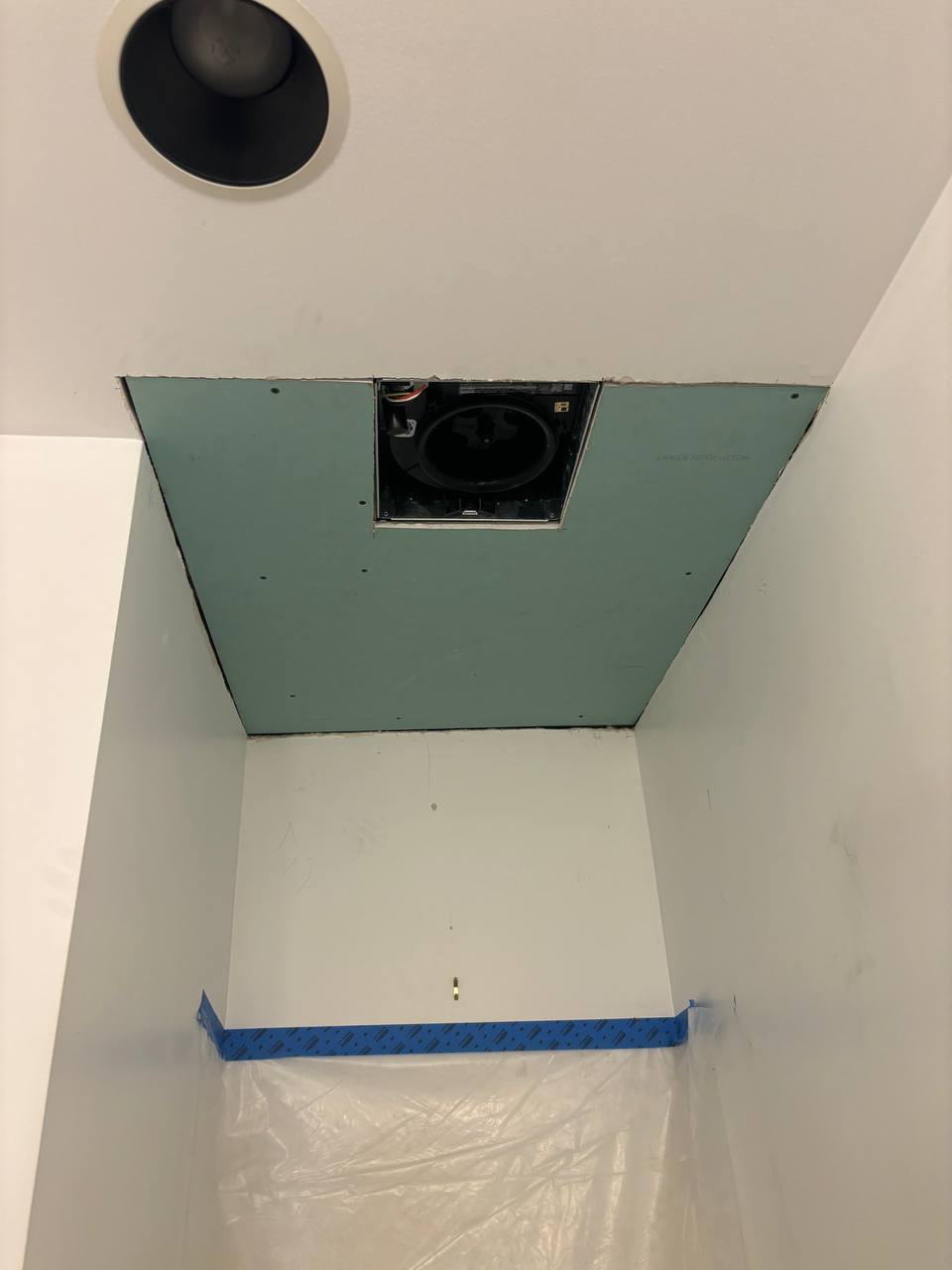


A complete bathroom remodel carried out by our own crew, from strip-out to final fit. The work included removing the old fixtures and finishes, repairing and levelling the substrate, waterproofing the shower area, tiling walls and floor, and installing the new vanity, toilet, mixer and shower screen. Plumbing and electrical were checked and brought up to standard as part of the same job rather than being left for someone else. We handle bathrooms as a single trade package. That matters because the usual delay on a bathroom is not the work itself, it is waiting for a tiler, then a plumber, then an electrician to each become available. Running it in-house keeps a standard bathroom in the two to three week range. We serve homeowners across Los Angeles and the San Fernando Valley, and provide a written scope and fixed price before starting.
A 1995 single-family home in Woodland Hills. A guest bathroom that had been refitted once already, around ten years ago, by somebody who did the visible work well and the invisible work badly.
He wanted a marble-look large-format tile, a niche in the shower for bottles, and the grout lines to stop going black. That last point is what people usually mean when they say they want a new bathroom.
The grout was not the problem. Behind the previous tile there was a sheet membrane that had been lapped the wrong way at one corner, so water had been getting behind it for years and coming back out through the grout. That is why the grout was staining: it was the only path back out. The shower floor had no real fall in one corner, the substrate under the tile was damp, and there was mould at the base of two studs.
Choosing a liquid-applied membrane over a sheet system, specifically because of how the previous one had failed. A sheet membrane is a good product and it is genuinely fast, but it depends entirely on the laps and the corner details being right, and one reversed lap in a corner nobody will ever see again undoes the whole system. That is exactly what had happened here. A liquid membrane is monolithic: the corners are banded and coated as one continuous surface and there is no lap to get backwards. It costs more in labour and in cure time. In a shower that has already failed once, that is the right trade.
Most niches are built as a hole in the wall, tiled, and left flat, so water stands in the bottom of them permanently. We waterproof the niche as its own wet area, give it a slight fall back into the shower, and mitre the tile at the returns so there is no trim edge holding water at the front lip. It is a small amount of extra work in the one detail everybody photographs and almost nobody builds properly.